
Devonport High School For Girls
Music
Music
Head of Department
Ms S Mitchell, BA (Hons), QTS, LWCMD
Statement of Intent
Music is all around us at all stages of our lives (starting with the nursery rhymes we sing to our babies). It is the soundtrack to our lives and is a valuable subject for all students to study whether they are a gifted musician or have never engaged in music outside of school. Music connects us through people and places in our ever-changing world. It is creative, collaborative, celebratory and challenging. At DHSG, music brings the school community together through singing, ensemble playing, experimenting with the creative process and, through the love of listening to friends and fellow pupils, performing. The sheer joy of music making can feed the soul of the school community.
Music’s place in education at DHSG has important wider benefits for personal and social development building confidence, self-esteem, sense of achievement and an ability to relate to others. Music develops the ability to think academically, emotionally, physically and spiritually.
We believe that students deserve a broad and ambitious Music curriculum, rich in skills and knowledge, which ignites curiosity and prepares them well for future learning or employment. Music is integral to our lives and our Music curriculum develops students’ ability to understand and engage with Music. Through our curriculum and extracurricular activities we aim to:
- develop a thorough understanding of music, through performing, composing, listening and appraising;
- develop self-confidence and a sense of achievement through performance, both through curriculum lessons and extracurricular participation;
- encourage creativity through composition;
- understand the complexities of music through analysis of a wide range of genres from different musical and cultural perspectives;
- understand how music can support the development of life skills, such as confidence, self-awareness, perseverance and discipline and provide a holistic experience that students can take beyond their musical studies;
- develop the cross-curricular skills of problem-solving, perseverance, diligence, team work, time management, organisation, responsibility and cultural history.
Curriculum Programmes of Study
|
Year |
Cycle | Content |
|---|---|---|
|
Year 7 |
Cycle 1 |
Introduction to Music at DHSG: Singing (vocal warm ups, simple partner songs, carol concert songs) Samba |
|
Cycle 2 |
Instruments of the orchestra |
|
|
Cycle 3 |
Just Play! (Musical Futures band work – Pop and Rock) |
|
|
Year 8 |
Cycle 1 |
Bamboo Tamboo - ‘Three Little Birds’ and ‘Riptide’ (Reggae and Pop) ‘In the Hall of the Mountain King’ (Romantic Music) |
|
Cycle 2 |
Feelin’ Blue (Blues) Musical Theatre ‘I Dreamed a Dream’ – class orchestra |
|
|
Cycle 3 |
Canon (Canon in D – Pachelbel) Theme and Variations |
|
|
Year 9 |
Cycle 1 |
Rock On! Rondos and Rounds |
|
Cycle 2 |
Film Music ‘Walking on the Moon’ (Modes and 7th chords) |
|
|
Cycle 3 |
Song Writing Own project/GCSE Bridging project |
|
|
Year 10 |
Cycle 1 |
Introduction to the course Elements of music (structure, texture, timbre, melody, rhythm, metre, dynamics, tempo, harmony, tonality) Rhythm and pitch notation Intervals Key signatures Articulation and phrasing Introduction to musical dictation Periods of Music Cadences Primary triads Introduction to Area of Study 1: Instrumental Music 1700-1820 Set works: Bach – Brandenburg Concerto No.5 in D Major (3rd Mov.) Unfamiliar listening: Baroque music Ensemble performance Introduction to composition Solo performance |
|
Cycle 2 |
Set works:
Unfamiliar listening: Classical music, Baroque music Rock and Pop music, Musical Theatre
Dictation exercises Free composition Solo performance |
|
|
Cycle 3 |
Set works:
Unfamiliar listening: Film and fusion music Dictation exercises Comparison questions Solo performance Free composition |
|
|
Year 11 |
Cycle 1 |
Revision of set works Revision of elements of music and key terms Musical Dictation Comparison questions Unfamiliar and familiar listening Brief composition Solo and ensemble performance |
|
Cycle 2 |
Revision of set works Revision of elements of music and key terms Musical Dictation Comparison questions Unfamiliar and familiar listening Past paper questions Brief composition Solo and ensemble performance |
|
|
Cycle 3 |
Revision of set works Revision of elements of music and key terms Musical Dictation Comparison questions Unfamiliar and familiar listening Past paper questions |
Lower Years Assessment Framework
To view the Lower Years Assessment Framework for Music, please click here
Middle Years Exam and Specification Information
Our middle years Music curriculum prepares students for the Edexcel GCSE Music examination and further study if they choose to continue their musical education beyond the age of 16.
Full details of the specification and assessment criteria can be found on the Edexcel website GCSE Music Specification
Extracurricular activities
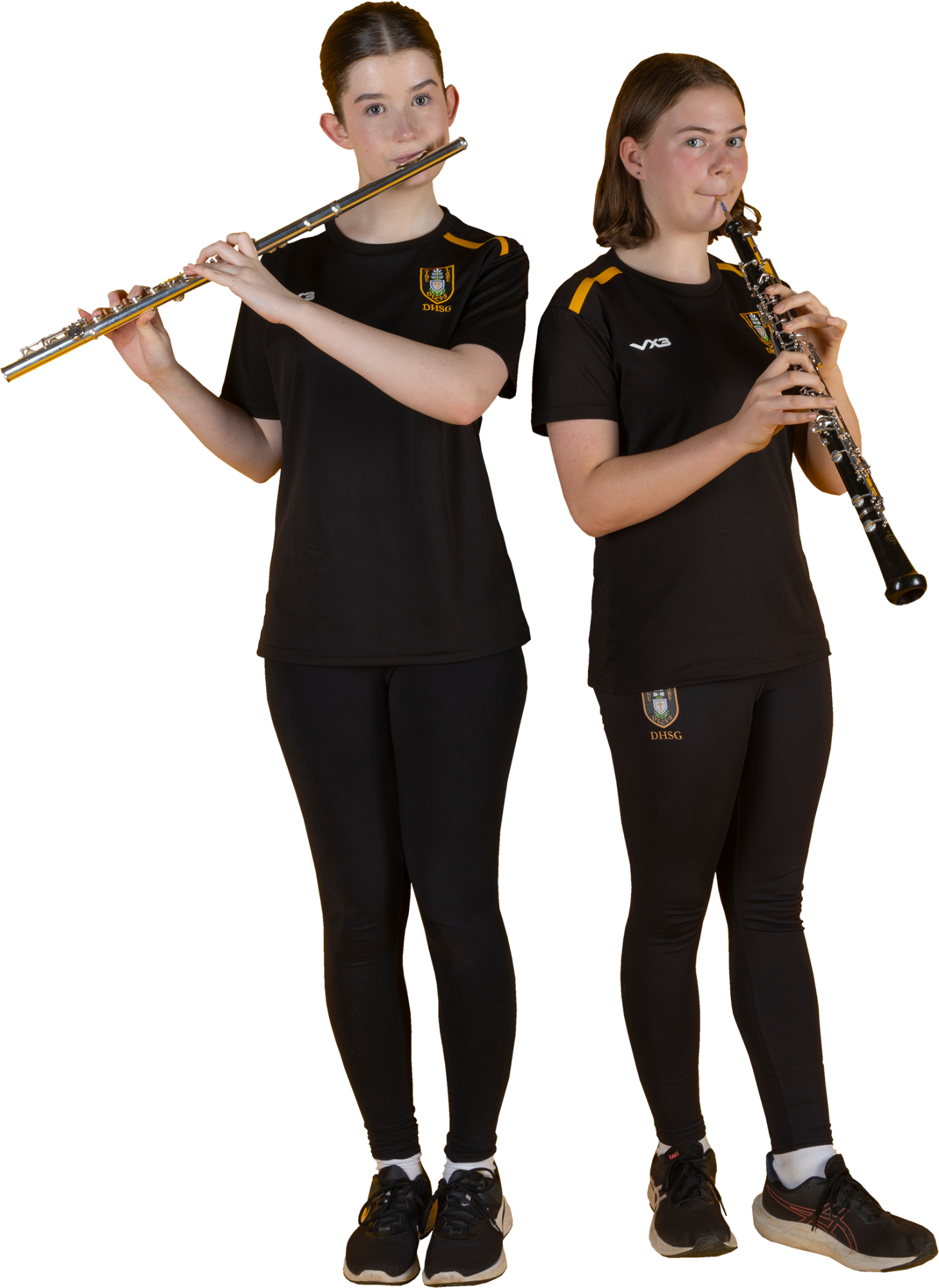
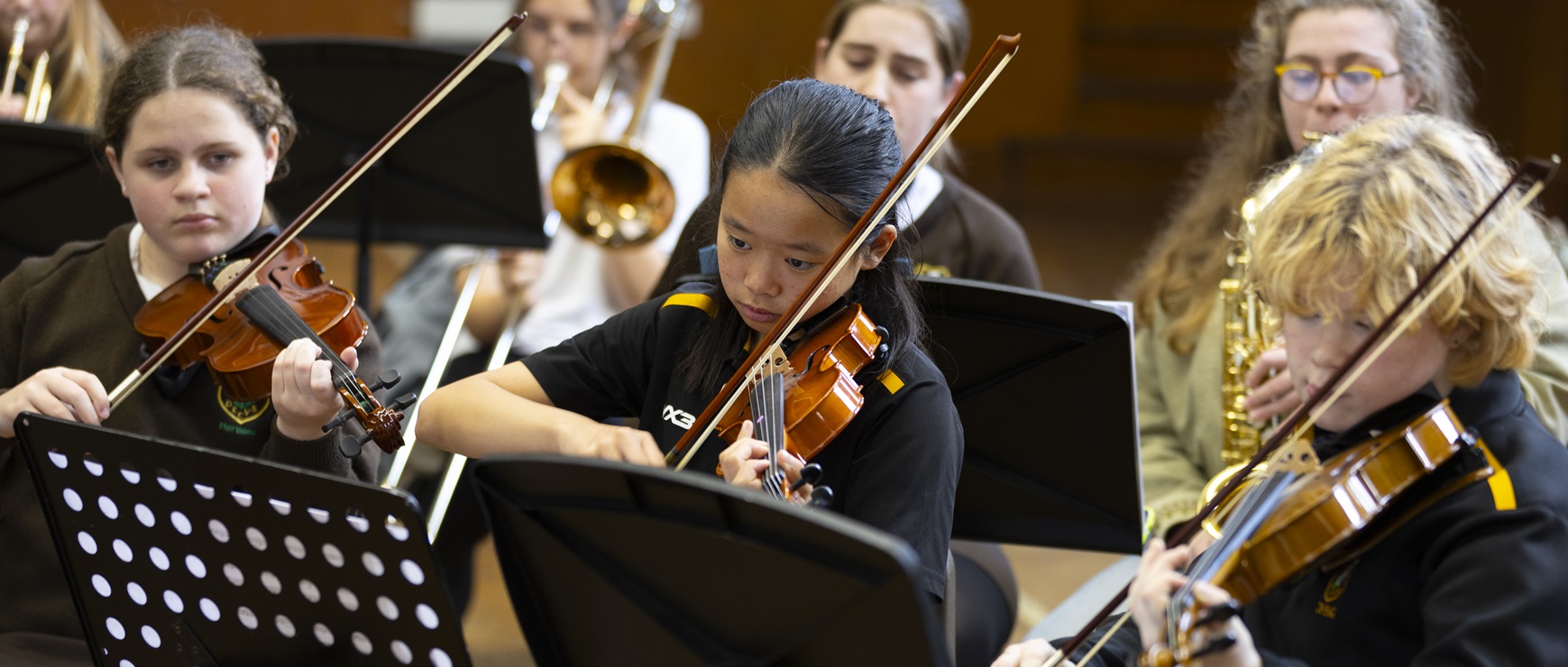
The extensive extracurricular music programme enables and supports musicianship in students of varying abilities, giving opportunities for students to experience a wide variety of genres and musical ensembles. As well as all-inclusive ensembles for mixed ability students who want the enjoyment of performing with others and developing their musical skills, such as Junior Choir, Senior Choir, Band Club, String Group and Orchestra, we also offer students the chance to audition for more advanced musical groups such as the Chamber Choir. Throughout each academic year there are a range of performance opportunities for these ensemble groups as well as opportunities for students to perform as a soloist or part of a small group. The bi-annual school Musical Theatre production is a joint performing arts project which stretches and challenges students; either by performing in the production band (for students Grade 5+ on their instrument) or by auditioning to be a member of the cast, where cast members and musicians develop their performance skills and professionalism. These clubs/events are not only to encourage enjoyment in the arts but also provide opportunities for students to learn about professional expectations and performance discipline. In addition to a range of extracurricular groups students also have the opportunity to take part in regular theatre visits and workshops arranged by the department.