
Devonport High School For Girls
English
Head of Department
Mr T Ashley, BA (Hons)
Statement of Intent
Here in the DHSG English department, we are committed to providing an outstanding, inspiring and ambitious curriculum which develops our students’ reading, writing, oracy and literacy skills. We want all pupils to leave our school as rounded, well-read and articulate individuals who have the ability to think critically and creatively – these are transferable skills which will set them up to succeed throughout life.
The department is brimming with experienced, dedicated and friendly staff who have consistently delivered some of the highest results in the South West for over a decade. Whilst we are proud of the academic success of our students, we are even more thrilled that so many choose to continue studying with us into the Sixth Form, where we maintain high numbers across both Literature and Language. We believe this demonstrates how many of our students value the contribution that a strong understanding of Literature and Language will offer their further education and employment opportunities.
Lower Years
Throughout our Lower Years curriculum, we use classroom time effectively to support our students to access a range of challenging texts, ranging from highly-regarded canonical classics to bold, contemporary voices. From Brontë and Dickens to Orwell and de Waal, we utilise our skills and knowledge as subject specialists to empower our students and allow them to thrive whilst tackling a diverse range of exciting and challenging texts. We complement this rich literature approach with regular ‘Writing Workshop’ lessons, where pupils are encouraged and supported to develop their creative and transactional writing skills; these lessons link thematically to the novels, plays and poems being studied at any given time, which further enhances student understanding and engagement.
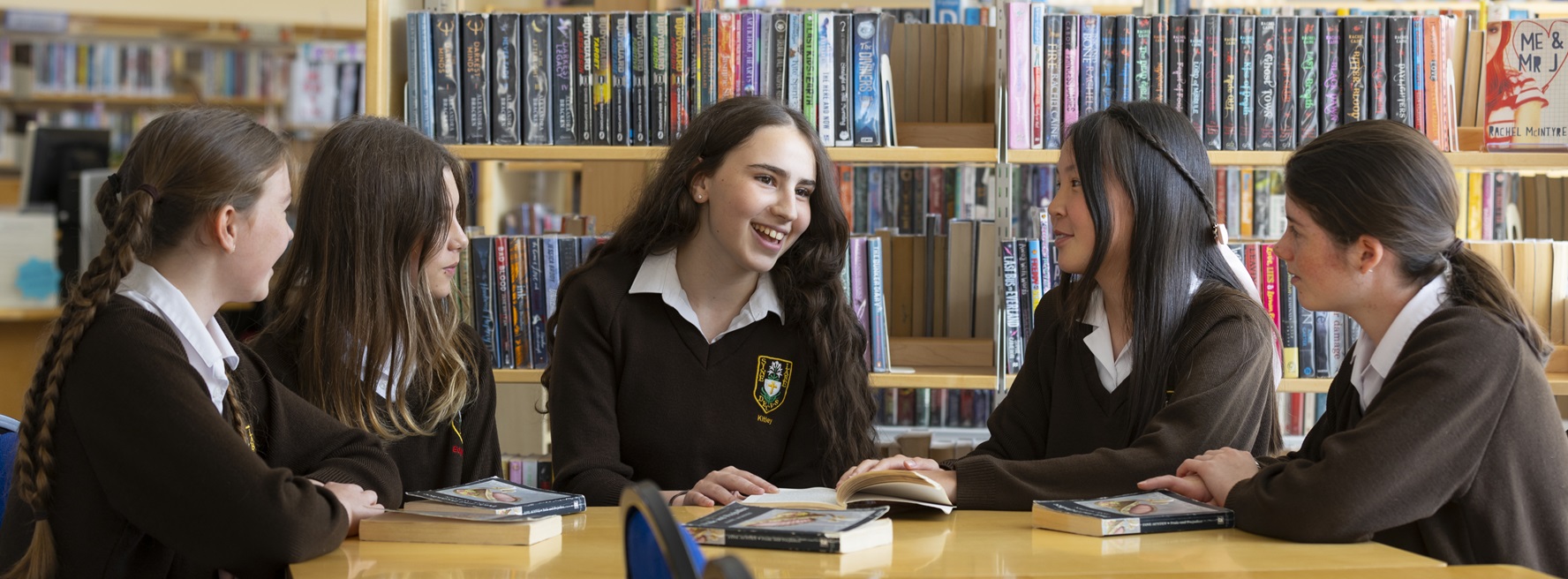
Outside the classroom, we guide pupils to explore modern texts from the ‘DHSG Canon’: a carefully curated collection of contemporary works selected by our English teachers, in collaboration with our wonderful librarians. By actively promoting independent reading, we allow our students more freedom and autonomy over their reading choices in order to broaden their scope and develop a habit of reading for pleasure. This is done in tandem with Sparx Reader, which allows us to assess a child’s comprehension as well as their engagement, and provide useful data to inform teachers of any required intervention and support.
Middle Years
As we move into the GCSE years, our students are well-equipped to tackle both the Literature and Language courses with confidence. We initially focus on completing the Literature course first, focusing on the knowledge-heavy content of the pre-taught texts whilst simultaneously developing skills which will be relied upon to tackle the more ‘unseen’ approach of the Language exams in Year 11.
As is befitting of a grammar school, we study a range of GCSE Literature texts which strike a delicate balance of rigour, diversity and enjoyment. Students are challenged in a structured and supportive environment, with plenty of opportunities to demonstrate their progress and celebrate their successes as the course develops.
Reading
Perhaps the biggest determiner of academic success is the ability to read well. We promote this in two ways: through Sparx Reader and the DHSG Canon.
Sparx Reader is a digital platform we use for homework each week across the Lower Years, which allows us to ascertain the reading speed, accuracy and comprehension of our students, as well as determining their reading age and identifying their reading preferences.
We combine this online approach with our DHSG Canon: in tandem with our fantastic library team and our wonderful student-led Diversity Council, we have created a list of books which we believe our students should read before they leave us. We integrate opportunities for students to demonstrate their engagement with the Canon through presentations, reviews and assemblies each year, to generate a positive and celebratory attitude towards reading for pleasure.
If you have any suggestions for books to be included in future versions of the DHSG Canon, please get in touch with your child’s English teacher!
Curriculum Programmes of Study
|
Year |
Cycle | Content |
|---|---|---|
|
Year 7 |
Cycle 1 |
‘The Merchant of Venice’ by William Shakespeare ‘A Christmas Carol’ by Charles Dickens |
|
Cycle 2 |
Revolutionary Romantic Poetry (Marlowe, Wordsworth and Coleridge) Creative Writing: setting descriptions |
|
|
Cycle 3 |
‘Jane Eyre’ by Charlotte Bronte, including opportunities for creative writing and oracy. |
|
|
Year 8 |
Cycle 1 |
‘Macbeth’ by William Shakespeare War Poetry: Hardy, Binyon, McCrae, Sassoon, Owen, Brittain and Sackville |
|
Cycle 2 |
‘Animal Farm’ by George Orwell, including opportunities for oracy |
|
|
Cycle 3 |
‘Blood Brothers’ by Willy Russell Creative writing: characters and flashbacks |
|
|
Year 9 |
Cycle 1 |
Creative writing and Reading Presentations: dystopian genre |
|
Cycle 2 |
‘My Name is Leon’ by Kit De Waal |
|
|
Cycle 3 |
Persuasive speeches and oracy (including Spoken Language endorsement). Unseen poetry |
|
|
Year 10 |
Cycle 1 |
GCSE English Literature: ‘Romeo and Juliet’ |
|
Cycle 2 |
GCSE English Literature: ‘Pride and Prejudice’ by Jane Austen |
|
|
Cycle 3 |
GCSE English Literature: ‘Love and Relationships’ poetry anthology GCSE Literature: ‘Telling Tales’ short stories anthology |
|
|
Year 11 |
Cycle 1 |
GCSE English Language: Paper 1 ‘Explorations in creative reading and writing’ GCSE English Literature revision |
|
Cycle 2 |
GCSE English Language: Paper 2 ‘Writers’ viewpoints and perspectives’ GCSE English Literature revision |
|
|
Cycle 3 |
GCSE English Literature revision GCSE English Language revision Exams |
Lower Years Assessment Framework
To view the Lower Years Assessment Framework for English Language, please click here
To view the Lower Years Assessment Framework for English Literature, please click here
Middle Years Exam and Specification Information
At DHSG, our students follow the AQA GCSE Language and Literature specifications. We treat Year 9 as a transition year, where students begin to consolidate and practise applying GCSE-level skills. We do this across a range of fiction and non-fiction texts, ready to approach their exam texts from Year 10.
In the Middle Years, the core English Literature texts we study are Shakespeare’s Romeo and Juliet, Austen’s Pride and Prejudice. We also study two anthologies collated by AQA: ‘Telling Tales’ short stories and the ‘Love and Relationships’ poetry anthology. We then study a range of non-fiction texts from the 19th century to the present day, as well as practise our fiction and non-fiction writing skills.
Full details of the specification and assessment criteria can be found on the AQA website GCSE English Language Specification and GCSE English Literature Specification
Extra-curricular activities
We do not believe learning should be limited to the classroom, and accordingly seek to provide a range of extra-curricular opportunities for our students across the English department.
In the Lower Years, we actively participate in two annual competitions: ‘Poetry by Heart’ and the Carnegie Book Awards, both of which provide further enrichment for our Lower Years students, as well as continuing to celebrate World Book Day.
In the Middle Years, we offer our ‘Debating Society’, with students having the chance to compete in competitions, both locally and nationally. In Year 11 we have our annual trip to Bath, where we visit the Austen Centre and watch Poetry Live - both of which are directly linked to our exam texts.
In the Upper Years, we have links with Plymouth University for students studying English Literature at A-Level, as well as a Cambridge trip at the start of Year 13 for those on the English Language course.
We also liaise with a range of theatres across the South West to identify opportunities to see performances and adaptations of any texts across our curriculum. Our intention is to provide every year group with at least one opportunity to see a live performance relating to their English studies during their time with us.